
Your toddler doesn’t know they’re in therapy—they just know they’re having fun.
That’s the beauty of early intervention ABA. While your little one is stacking blocks, chasing bubbles, or “reading” their favorite board book for the hundredth time, they’re also learning critical skills that will shape their communication, independence, and relationships for years to come.
Early intervention refers to therapy services provided to young children, typically between 18 months and 5 years old. This window of time is extraordinary. A child’s brain is forming millions of neural connections every single day, making it the ideal time to introduce new skills, strengthen emerging abilities, and build a strong foundation for school and social life.
But here’s what many families don’t realize: early intervention ABA doesn’t look like “therapy” in the traditional sense. It looks like childhood.
What Early Intervention ABA Actually Looks Like
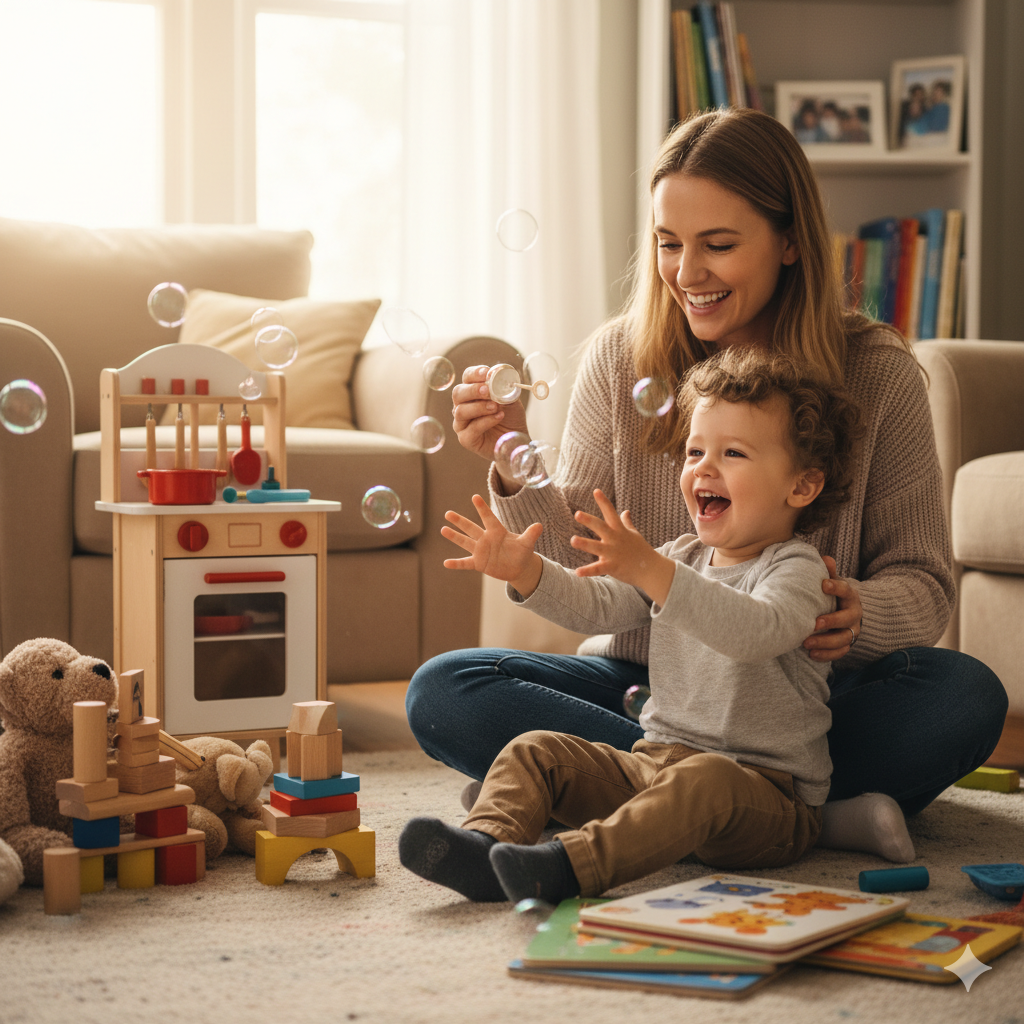
Picture this: A therapist sits on your living room floor with your 2-year-old. There are colorful toys spread out—blocks, a toy kitchen, stuffed animals, books. Your child reaches for the bubbles, and the therapist smiles, holds them up, and waits. Your child looks at her, reaches again, and she says, “Bubbles! Say bubbles!” Your child makes a sound—maybe “buh”—and suddenly, bubbles are everywhere. Giggles fill the room.
This is therapy.
Early intervention ABA happens in the moments that matter most—playtime, snack time, bath time, getting dressed, going for walks. Our therapists don’t bring flashcards and worksheets. We bring curiosity, patience, and a genuine love for being in your child’s world.
We meet children where they are—literally. On the floor. At the kitchen table. In the backyard. Wherever life happens, that’s where learning happens.
Sessions are playful and engaging because young children learn best when they’re interested, motivated, and having fun. We follow your child’s lead, building on what excites them while gently introducing new skills in ways that feel natural.
Skills That Grow Through Play
So what exactly are we teaching when it looks like we’re “just playing”?
Communication and First Words
Every interaction is an opportunity for language. When your child wants a toy, we create a moment for them to request it—with words, sounds, gestures, or pictures. When we read books together, we pause and wait, inviting them to fill in their favorite parts. When we play with toy animals, we model sounds and names, turning play into conversation.
Joint attention—the ability to share focus with another person—develops naturally during play. Looking at the same book, building a tower together, or rolling a ball back and forth teaches your child that connection with others is joyful and rewarding.
Daily Living Skills
Getting dressed, washing hands, sitting at the table for snacks, putting toys away—these everyday tasks are actually complex skills. Through play and routine, we break them down into manageable steps. Your child learns to pull on their shirt, zip their jacket, pour their own juice. Each small success builds confidence and independence.
Social and Emotional Skills
Play is a child’s first social language. Taking turns with blocks, sharing toys, imitating actions, responding to their name—these are the building blocks of relationships. We create opportunities for your child to experience the joy of playing with others, celebrating small moments of connection that will grow into friendships.
Neighborhood Walks and Community Outings
Therapy doesn’t stay inside four walls. We go on walks, visit the playground, practice at the grocery store. These outings teach safety skills (holding hands, stopping at the curb), community awareness (waving to neighbors, saying “hi”), and real-world independence.
All of this happens through play, through natural routines, through the rhythms of childhood. And it all adds up. These early skills become the foundation for starting school, making friends, and navigating the world with confidence.
The Home Advantage
There’s a reason we provide early intervention in your home—it’s the most powerful learning environment for young children.
Home is where your child feels safest and most comfortable. It’s where they’ll use their new skills every single day. When we teach your toddler to ask for “more” at snack time in your kitchen, they’re learning in the exact place where that skill matters most.
Home-based therapy also means we’re coaching you in real time. You’ll see exactly what we’re doing and why. You’ll learn strategies you can use during playtime, meals, bedtime routines, and those in-between moments throughout the day. This isn’t therapy that stops when we leave—it’s therapy that becomes woven into your family’s daily life.
And perhaps most importantly, learning at home means your child isn’t being pulled from familiar surroundings. There’s no anxiety about new places. Just comfort, connection, and growth happening right where they already feel secure.
What Parents Can Expect
Starting early intervention can feel overwhelming, but it’s also filled with hope. Here’s what the journey typically looks like:
Collaborative Goal Setting
We don’t walk in with a predetermined plan. We talk with you. What do you want for your child? What skills would make the biggest difference in your family’s daily life? Maybe you want your child to communicate their needs so there’s less frustration. Maybe you want help with mealtimes or bedtime. Maybe you want them to engage more during family activities.
Your priorities become our priorities. Together, we create goals that are meaningful, achievable, and tailored to your child’s unique path.
Understanding Progress
Yes, we track data—but not in a cold, clinical way. We’re simply paying attention to your child’s progress so we can celebrate growth and adjust when needed. You’ll see the data too, but more importantly, you’ll see the progress in everyday moments. The first time your child says a new word. The morning they put on their shoes by themselves. The afternoon they play alongside their sibling instead of alone.
Small wins lead to big gains. A single word becomes two words, then phrases, then conversations. Sitting at the table for two minutes becomes five minutes, then a full snack, then a family meal. Every step forward matters.
Realistic Timelines
Early intervention is not a quick fix—it’s an investment in your child’s foundation. Some children make rapid progress; others take more time. Every child is unique, and that’s okay. What matters is consistent, joyful learning that builds momentum over time.
We’re not in a race. We’re on a journey with your family, celebrating each milestone, big and small.
Taking the First Step
Early intervention is about meeting your child exactly where they are and helping them take meaningful steps forward—through play, through joy, through connection.
If you’re wondering whether early intervention might be right for your child, trust your instincts. You know your child best. And we’d be honored to walk this journey with you.
At Steps Behavior Solutions, we believe every child learns on their own unique path. We’re here to make that path a little clearer, a little brighter, and filled with moments that matter.
Let’s take those first steps together.

0 Comments